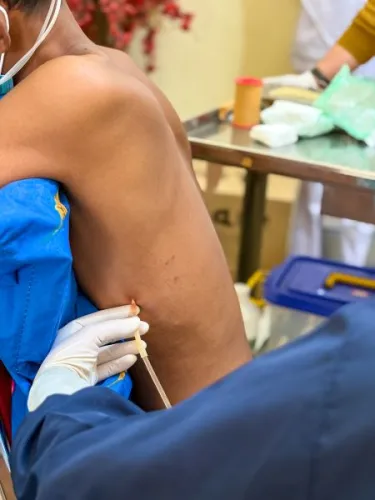
Nail Image Guidance Rules to Avoid Thoracentesis Denials
Learn what separates a diagnostic procedure from therapeutic. Thoracentesis claims can hinge on small documentation details, such as whether the service was diagnostic, therapeutic, or both, and if the provider used imaging to guide needle placement. With knowledge of what to look for in the operative note and the patient record, you can select the correct CPT® code and support medical necessity for the procedure. Dive into this guide to get to know the thoracentesis procedure and how to keep your claims compliant. What Does a Thoracentesis Procedure Entail? Thoracentesis is a medical procedure that providers perform to remove fluid from the patient’s pleural space. The pleural space is the area between the lungs and the inner chest wall. Certain conditions can cause fluid to leak into and gather in the pleural cavity. This is called pleural effusion. During the procedure, the physician numbs an area between the sixth and eighth intercostal spaces while the patient is seated or in the supine position. Once the area is numbed, the physician makes a small incision and inserts another needle to remove the pleural fluid through a tube. The provider may use imaging to guide the needle into the pleural cavity. Identify Thoracentesis CPT® Codes The CPT® code set includes two codes for thoracentesis procedures: The physician performs thoracentesis for diagnostic, therapeutic, or diagnostic and therapeutic purposes. During a diagnostic thoracentesis, the provider will extract a small volume of fluid (usually 20 to 30 mL) that will be analyzed according to Light’s criteria. Physicians use Light’s criteria to determine if pleural effusion is transudative or exudative. The testing documentation should include: A pulmonologist will perform diagnostic thoracentesis if the patient is experiencing idiopathic (unexplained) pleural effusion, if the provider suspects an infection, if the provider suspects malignancy, or to determine if the fluid accumulation is due to heart-related or noncardiac issues. A therapeutic thoracentesis involves removing a significant amount of fluid from the pleural space — think liters of fluid rather than milliliters for testing. If the provider suspects a change in the cause of the pleural effusion, they’ll submit a small sample of the large volume for analysis. Regardless of whether the physician performs a diagnostic or therapeutic thoracentesis, you’ll use either 32554 or 32555 to report the procedure. The difference comes down to if the provider used imaging, such as point-of-care ultrasound (POCUS), to guide their needle placement. Know What Conditions Support the Need for Thoracentesis While thoracentesis is a fairly simple procedure that doesn’t take much time to perform, determining the correct ICD-10-CM codes to support medical necessity for the procedure may require careful review of the documentation. Coding best practices instruct you not to report a condition code until the physician has reviewed and confirmed the pathology report. Prior to a diagnosis being confirmed or ruled out, you’ll use signs and symptoms codes that reflect what the patient was experiencing at the time of the visit. Examples of these codes include R06.02 (Shortness of breath), R07.1 (Chest pain on breathing), R09.02 (Hypoxemia), and R05.1 (Acute cough). The physician will issue a diagnosis once the specimen has been analyzed. As mentioned above, pleural fluid accumulation can occur for several reasons. The following are examples of possible conditions and the applicable codes based on the pleural fluid analysis: Multiple codes: If the provider determines that the pleural effusion is due to CHF, you’ll use the most accurate CHF code and J91.8 to report the two conditions. For a malignancy confirmation, assign the applicable neoplasm code with J91.0. Avoid These Common Errors Regardless of whether you’re new to pulmonology coding or are a seasoned coder, paying attention to guidelines and regulations will help you ensure your thoracentesis claims are compliant. Use these helpful tips to promote proper coding: Examine This PE Case Scenario: A 62-year-old patient presented to the emergency department (ED) with complaints of progressive shortness of breath and chest discomfort on the right side. For the past 10 days, the patient has experienced worsening dyspnea, dry cough, and sharp lateral pain that is worse with deep inhalation. The provider ordered upright posteroanterior (PA) and lateral chest X-rays as well as a lateral decubitus chest X-rays. After reviewing the images, the provider determined that the patient had free-flowing pleural fluid along the right chest wall and thoracentesis was ordered. A pulmonologist performed thoracentesis with POCUS at the eighth intercostal space. Approximately 120 mL of fluid was initially collected for analysis. The results of the pleural fluid analysis showed exudate by Light’s criteria and negative cytology and cultures. The pulmonologist diagnosed the patient with idiopathic exudative pleural effusion. Following analysis, the pulmonologist removed 2,000 mL of fluid. The patient tolerated the procedure well. In this scenario, the pulmonologist performed a diagnostic thoracentesis and then converted it to a therapeutic procedure once the analysis confirmed a pleural effusion condition. The thoracentesis procedure was performed with POCUS imaging guidance to ensure accurate placement of the needle. Because of the use of ultrasound, you’ll assign 32555 to report the thoracentesis procedure with image guidance. Next, you’ll use J90 (Pleural effusion, not elsewhere classified) to report the documented diagnosis following the pleural fluid analysis. Code J90 features “Pleurisy with effusion (exudative) (serous)” as an additional condition that is reported with the code. Mike Shaughnessy, BA, CPC, Production Editor, AAPC