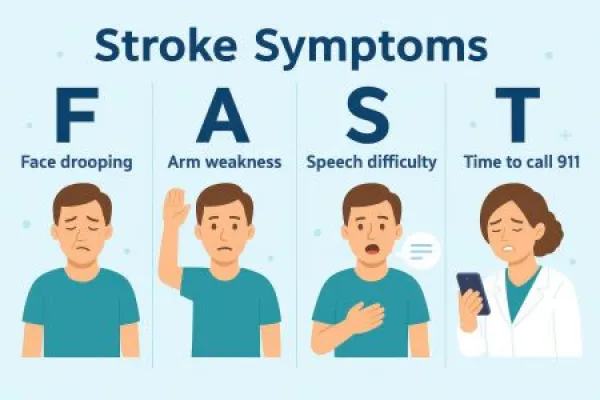
Prevent Inaccurate Stroke Coding FAST
When a patient displays these four symptoms, stroke is a real possibility. When a patient is showing signs of a stroke, it is important to act quickly to determine if one has occurred and if treatment is needed immediately. Time is of the essence. Documentation of stroke signs and symptoms, as well as testing performed to rule out or confirm stroke, are incredibly important. After the neurologist identifies a stroke, it’s up to you to sort through all the details so you can code the stroke testing accurately and thoroughly. Read on for more information on coding for patients who exhibit stroke-like symptoms. Follow ASA Recommendations to Test for Stroke Signs According to the American Stroke Association (ASA), warning signs of a stroke include facial drooping, arm weakness, speech difficulty, confusion, and vision and balance problems. Because speed of treatment is essential, it’s very important that people who may be having a stroke to be taken to the nearest hospital for evaluation by a neurologist. Note: The ASA recommends using the acronym FAST (Face drooping, Arm weakness, Speech difficulty, Time to call 911) to help providers remember important stroke symptoms. Stroke Evaluation Can Take Many Forms When a provider suspects a patient may be experiencing an active stroke, a variety of imaging, blood, and vascular tests may be ordered in addition to the practitioner performing a neurological exam. Imaging tests of the brain can include CT, CT angiography (CTA), MRI, magnetic resonance angiography (MRA), and cerebral ultrasound. Here are some of the codes that represent the brain-related tests listed above: Note: This is not an exhaustive list of all the codes for the above services. A CT and MRI will reveal bleeding and brain tissue damaged by stroke. During an angiography, the physician injects dye into the bloodstream to view the blood vessels of the neck and brain in greater detail — for example, to highlight blood flow. Carotid ultrasound shows any buildup of plaques and blood flow. Other tests may be acquired that can point to or rule out stroke, including complete blood count (CBC), glucose levels, international normalized ratio (INR), and prothrombin time test (PTT). Here’s a look at some of the codes you’ll use to report the services listed above: Note: This is not an exhaustive list of all the codes for the above services. The CBC provides information on the platelets, white blood cell count, and red blood cell count. A glucose blood test will help rule out hypoglycemia, which mimics stroke symptoms. The INR and PTT tests measure how quickly the blood clots. Blood tests such as electrolyte and renal function tests may also be ordered, as these issues can cause similar neurological symptoms. A neurological exam, typically the National Institutes of Health Stroke Scale (NIHSS), should also be administered to assess any impairment and track the patient’s progress over time. This exam provides a score to measure the severity of neurological deficits, as well as determining the necessary treatment by observing speech, vision, muscle strength, and coordination. When the physician performs a neurological exam, you’ll consider it part of the overall evaluation and management (E/M) service. Know Stroke Code Sets When the neurologist does confirm a stroke, you’ll need to assign the most specific diagnosis code possible for the patient’s condition. The code sets you’ll look to are: Don’t forget: If the neurologist performs an NIHSS test, include a secondary diagnosis code from the R29.7- (National Institutes of Health Stroke Scale (NIHSS) score) set. Get a Look at This Stroke Scenario Check out this example of a patient who suffered a stroke: Patient chief complaint: A 63-year-old presents to the emergency department (ED) with right-sided facial drooping, double vision, slurred speech, and confusion. The ED physician sends for the neurologist on call to perform the medically necessary evaluation. Physician actions: The neurologist completes a neurological exam, NIHSS assessment, and acquires a medical history. Upon completion, they order a CBC, CT without contrast, MRA without contrast, glucose blood test, carotid ultrasound, and INR/PTT. The hospital interprets the CT and the MRA. After the extensive testing and examination, the patient is determined to have experienced an acute ischemic stroke caused by an embolism of the right anterior cerebral artery; they had an NIHSS score of 10. Encounter notes indicate that the neurologist admitted the patient into observation care; during the E/M, the neurologist performed high-level medical decision making. Coding: On the claim, you should report: Gabriella Gifford, CPC, CDEO, CPMA, CRC, CVBA, Oklahoma City