Follow These Guidelines for Successful ACP Documentation
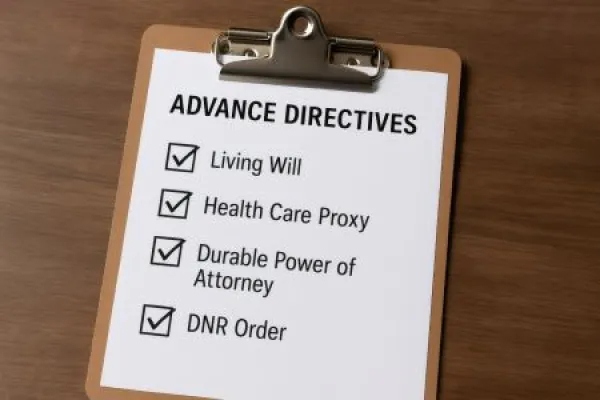
Question: Our oncology practice has been providing advance care planning (ACP) services to our terminally ill cancer patients, but I am not sure we have been reporting it correctly. What should we be documenting, and can we bill for the services separately from other evaluation and management (E/M) services? Revenue Cycle Insider Subscriber Answer: As 99497 (Advance care planning including the explanation and discussion of advance directives such as standard forms (with completion of such forms, when performed), by the physician or other qualified health care professional; first 30 minutes, face-to-face with the patient, family member(s), and/or surrogate) and +99498 (… each additional 30 minutes (List separately in addition to code for primary procedure) are both time-based codes, the first thing you need to document when billing for them is time. Specially, you must show the provider has spent at least 16 minutes performing the services outlined in 99497 before you can submit the code for reimbursement, and at least 46 minutes before you can report 1 unit of +99498 in addition to a unit of 99497. In addition to documenting the time spent discussing ACP, you will also need to document: You should also document the provider’s discussion of any forms reflecting the patient’s end-of-life wishes. According to the Medicare Learning Network (MLN) Advance Care Planning Fact Sheet, these should include: Note: Per the CPT® descriptor for 99497, you only need to document the discussion of these documents; completion of the forms only needs to be documented “when performed.” In many cases, your practice can bill an ACP discussion separately from an E/M service. For example, suppose your provider sees an established patient for an E/M to manage a current cancer treatment. At the time of treatment, the provider believes the cancer has the potential to become terminal, so the provider decides this is an opportune moment to discuss end-of-life care issues with the patient and a family member attending the appointment. In this situation, along with reporting the appropriate units of 99497/+99498 to reflect the amount of time the provider spent in ACP discussion with the patient and family member, you will be able to bill the appropriate code from 99212-99215 (Office or other outpatient visit for the evaluation and management of an established patient…) for the office/outpatient E/M, appending modifier 25 (Significant, separately identifiable evaluation and management service by the same physician or other qualified health care professional on the same day of the procedure or other service) to 99212-99215 per payer guidelines. Bruce Pegg, BA, MA, CPC, CFPC, Managing Editor, AAPC