Check out the Complexities of ED Wound Care Coding
Remember to code to the deepest level debrided. At 2 a.m., a patient arrives in the emergency department (ED) with multiple traumatic wounds, contamination, and unclear history. The provider moves quickly, debriding tissue, controlling bleeding, and preparing for possible closure. Hours later, the chart lands in the coder’s queue. What looks like “just wound care” quickly becomes a high-stakes coding puzzle involving depth, surface area, bundling, and medical necessity. Welcome to ED wound care coding, where even experienced coders can find themselves second-guessing every code selection. Recognize all Wound Care Elements Wound care coding has never been for the faint of heart. Between anatomic specificity, tissue depth, surface area calculations, and ever-present bundling rules, even seasoned coders can find themselves double-checking every detail. Just when it seems manageable, the ED introduces another layer of complexity where time, documentation variability, and medical necessity collide. Understanding wound care coding in the ED setting requires not only a firm grasp of CPT® coding guidelines, but also the ability to apply them in fast-paced, high-acuity scenarios. Let’s break down the key challenges, coding principles, and ED-specific pitfalls that make coding in this area uniquely complex. Understand How ED Wound Care Coding Is Different Unlike outpatient wound clinics or surgical settings, the ED operates under a sense of urgency. Providers focus on stabilizing patients first, and documentation later. This creates a coding environment where records may be less structured, procedures are performed rapidly, multiple conditions are treated simultaneously, and medical necessity must be inferred from clinical context. Add to that the scrutiny of Centers for Medicare & Medicaid Services (CMS) guidelines, and coders must carefully translate clinical intent into compliant, defensible coding. Know Surgical Debridement Coding Basics Before diving into ED-specific nuances, coders must master the fundamentals of surgical debridement. Debridement coding is based on the deepest level of tissue removed, not the wound’s original depth. This is one of the most critical and commonly misunderstood rules of debridement coding. For example, the CPT® code must describe the tissue level being debrided: epidermis, dermis, subcutaneous tissue, muscle fascia, or bone. Even if multiple layers are addressed, the deepest level determines the correct code. Surface Area Still Matters Depth alone is not enough; surface area also plays a major role. For a single wound, report depth based on the deepest tissue removed. For multiple wounds of the same depth, add the total surface area together. Do not combine surface areas across different depths. This becomes especially important in ED cases where multiple traumatic wounds are treated simultaneously. Check out These Common Debridement Codes Below are examples of frequently reported codes: Each additional 20 sq cm is reported with add-on codes, reinforcing the importance of precise measurement calculations within provider documentation. Complexity Is Where Guidelines Meet Reality ED patients often present with lacerations, abrasions, crush injuries, or contaminated wounds. Each may require different levels of debridement. When wounds differ by depth and anatomical site, coders may need to append modifier 59 (Distinct procedural service) to indicate separate procedures. However, this must be supported by clear documentation of different locations, different depths, and separate clinical necessity. Coders should also remember that codes 11010 (Debridement including removal of foreign material at the site of an open fracture and/or an open dislocation (eg, excisional debridement); skin and subcutaneous tissues) through 11012 (… skin, subcutaneous tissue, muscle fascia, muscle, and bone) are reserved for fracture-related debridement, not simply deep wounds. This distinction is critical in ED trauma cases. These codes are based on the presence of an open fracture, not just the severity of tissue damage. Misapplication here is a common audit finding. Beware of the Bundling Trap ED wound care often involves multiple steps such as debridement, irrigation, closure, and grafting. However, not all steps are separately reportable. When a wound is debrided prior to a graft or skin substitute, the debridement is included in the graft procedure and should not be coded separately. Instead, report the appropriate surgical preparation code, such as 15002 (Surgical preparation or creation of recipient site by excision of open wounds, burn eschar, or scar (including subcutaneous tissues), or incisional release of scar contracture, trunk, arms, legs; first 100 sq cm or 1% of body area of infants and children) through +15005 (Surgical preparation or creation of recipient site by excision of open wounds, burn eschar, or scar (including subcutaneous tissues), or incisional release of scar contracture, face, scalp, eyelids, mouth, neck, ears, orbits, genitalia, hands, feet and/or multiple digits; each additional 100 sq cm, or part thereof, or each additional 1% of body area of infants and children (List separately in addition to code for primary procedure)) for recipient site preparation. This aligns with guidance from National Correct Coding Initiative (NCCI) edits. Use 1 Code for Debridement/Callus Removal A common ED scenario includes debridement of a wound and removal of a surrounding callus. Even though these may appear to be separate services, when performed at the same anatomical site, you should only report the more comprehensive procedure. In the above scenario, report 11042 and do not report 11055 (Paring or cutting of benign hyperkeratotic lesion (eg, corn or callus); single lesion) separately, as both procedures were performed at the same site. This reflects NCCI bundling rules and prevents upcoding. Documentation Is the Biggest Coding Risk If there is one area where ED wound care coding rises or falls, it is documentation. Coders should ensure the record clearly supports depth of tissue removed, total surface area by depth, anatomical locations, presence of necrotic or devitalized tissue, medical necessity for debridement, and any separate procedures when applicable. Without this level of detail, even correctly performed procedures may be downcoded or denied. Amanda Brewer, RHIT, CCS, CRC, CPMA, CDEO, Senior Consultant,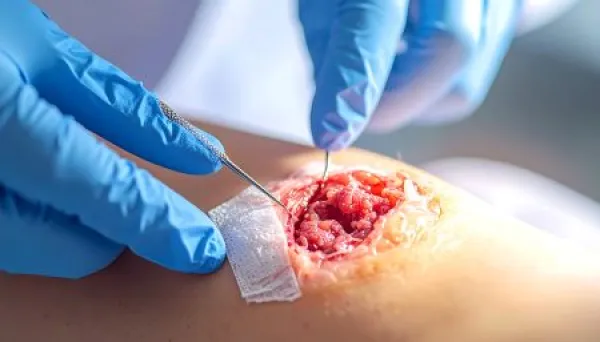
Pinnacle Enterprise Risk Consulting Services (PERCS)