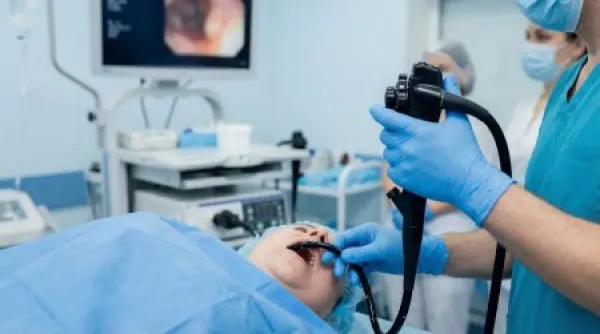
Find the Light at the End of the Tunnel With Esophagoscopy Procedures
Procedure purpose is key when choosing the correct anesthesia code. Esophagoscopy cases are incredibly common, with roughly 10 million seen annually in the United States alone. A specific type of endoscope, the esophagoscope, is used to visualize a patient’s esophagus. These procedures are used to diagnose issues like acid reflux, hiatal hernias, Barrett’s esophagus, strictures, and to remove foreign bodies. When transnasal entry is used, biopsies may be taken in some instances as well. Many of these scenarios require the patient to be placed under general anesthesia during the process. Read on to learn more about the different entry points of the esophagoscope and how to code procedures using anesthesia services on your claims. Look to These Anesthesia Codes for Esophagoscopy Procedures CPT® distinguishes the anesthesia codes for procedures in the digestive tract based on anatomical location. When coding for esophagoscopy procedures, you will look to the following codes most often: Esophagoscopy Procedures Explained If foreign body removal (FBR) is required, your provider may perform an esophagoscopy. Using the esophagoscope gives the practitioner a way to visualize the esophagus and entry to the stomach to investigate any conditions that may be affecting them. During this visualization, the practitioner can remove any blockages or foreign bodies, take tissue samples for testing, and examine the lining. There are two esophagoscopy entry point options: transoral, where the provider passes the esophagoscope through the patient’s mouth; and transnasal, where the provider passes the scope through the patient’s nose. For many transnasal procedures, the patient will remain conscious, and a numbing solution may be used instead to keep them comfortable. The thin endoscope used during this method goes through the nose and down into the esophagus. This procedure is mainly used for diagnostics and sometimes for small biopsies. Transoral procedures can be performed as a rigid esophagoscopy, which uses a narrow tube with lenses, light, and an eyepiece. The method can be used to perform minor surgical procedures, and anesthesia is required. This method is usually performed by otolaryngologists (ENTs) or head and neck surgeons. Flexible esophagoscopy is a method that uses thin fibers to illuminate a patient’s gut. The fibers are also connected to a screen so the practitioner can view everything in real time. The patient would be moderately or deeply sedated during this procedure. Look for These Esophagoscopy Codes Choose esophagoscopy codes from 43180-43233 to report an endoscopic examination of the esophagus (even if the ENT surgeon accidentally enters the stomach, as may happen during the examination). The codes most often used are: Note: For diagnostic transnasal esophagoscopies, use 43197. If your provider also performs a biopsy, CPT® takes you to 43198 (Esophagoscopy, flexible, transnasal; with biopsy, single or multiple). When additional services are provided, such as dilation, you may choose a code such as: Code This Scenario A new patient visits the ENT surgeon’s office describing a painful sensation when they swallow. They describe it as feeling something scratching the inside of their throat and say that coughing and over-the-counter pain medication has brought no relief. During a brief history and exam, the patient explains that the pain began after eating at a buffet, which included chicken and prime rib. Because this has been bothering them for several days, the surgeon decides to place the patient under general anesthesia to perform an upper gastrointestinal endoscopic exam using rigid esophagoscopy to see what is causing the patient’s pain. The surgeon visualizes the esophagus and removes a small piece of chicken bone easily. Total anesthesia time is 26 minutes. For this scenario, the procedure coding on your claim should look like this: The ICD-10-CM codes you will need are as follows: Lindsey Bush, BA, MA, CPC, Production Editor, AAPC